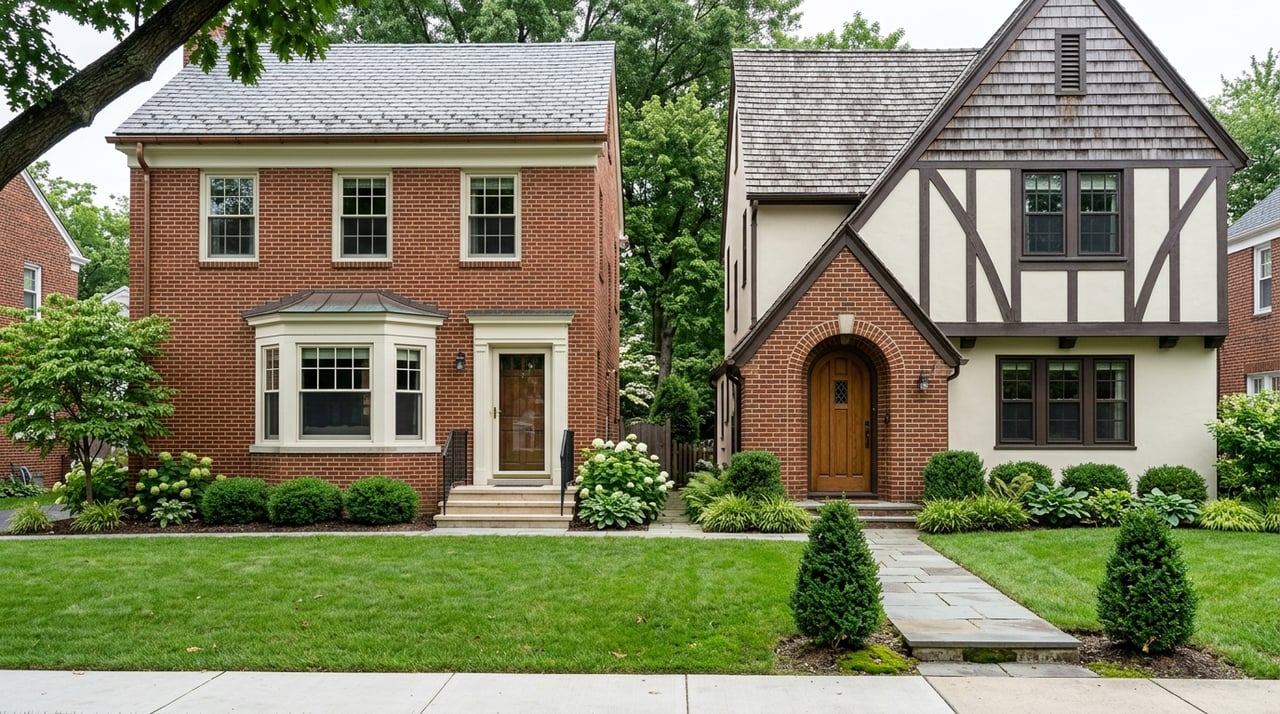
If Princeton feels hard to pin down, that is because it truly offers a lot in a relatively small place. In one part of town, you may find 18th-century brick homes and mixed-use blocks near Nassau Street. In another, you may see planned townhouse communities, garden-style apartments, or mid-century modern homes tucked into a quiet enclave. If you are trying to figure out which areas and home styles best match your goals, this guide will help you understand the landscape more clearly. Let’s dive in.
Why Princeton Feels So Varied
Princeton’s housing stock is unusually diverse for a compact municipality. The town covers 18.4 square miles, and more than one-quarter of its land is preserved as open space. That combination helps create a place where older neighborhoods, planned communities, and newer infill can all exist within a relatively tight footprint.
Princeton’s 2023 master plan also helps explain the mix. It identifies central neighborhoods, multi-family neighborhoods, and mixed-use nodes. In plain terms, that means you can find everything from single-family homes on smaller lots to townhouses, apartment buildings, and residential spaces near retail and office uses.
Another reason neighborhood labels can feel fluid is Princeton’s 2013 consolidation of the former Borough and Township into one municipality. Today, many of the names buyers use are drawn from historic districts, well-known streets, and planning areas rather than strict subdivision lines. For you as a buyer or seller, that means it helps to look beyond the label and focus on the actual setting, housing type, and architectural character of each area.
Historic Core Home Styles
If you are drawn to older architecture, Princeton’s historic core is usually where the widest range appears. The Central Historic District includes the central business district and large parts of the university area, with buildings dating from the 18th through the 20th centuries. Along Nassau Street, you can see Federal, Second Empire, Renaissance Revival, and Colonial Revival architecture, including the Colonial Revival character of Palmer Square.
This part of Princeton often appeals to buyers who want a sense of history and an established streetscape. Residential and mixed-use buildings can sit close together, and the architecture changes block by block. You are not just looking at one style here. You are looking at layers of Princeton’s development over time.
For early-stage buyers, this is often the area where the home search becomes more nuanced. A property may offer historic details, a central location, and a distinctive exterior, but the age and context of the home may shape your renovation plans and long-term maintenance decisions.
Jugtown’s Older Residential Mix
Jugtown, near Nassau and Harrison Streets, adds another dimension to the historic core. It began as a late-17th-century settlement and developed into an area with houses, stores, a tavern, and a pottery works by the end of the 18th century. Today, its surviving housing mix includes modest 18th-century brick dwellings, later Federal-style wood-framed houses, and later Queen Anne and Colonial Revival homes.
For you, Jugtown can be a useful example of how Princeton neighborhoods evolved gradually rather than all at once. Instead of one uniform streetscape, you may see homes from different eras side by side. That variety is part of Princeton’s character and part of why home searches here often benefit from a neighborhood-by-neighborhood approach.
Witherspoon-Jackson Housing Character
Witherspoon-Jackson is identified by Princeton as the center of the town’s historic Black community, and it has a distinct neighborhood-scale residential character. Houses along Witherspoon Street mainly date from the early and mid-19th century. In the main blocks, many homes are 2 to 2½ stories, and porches or stoops remain a common feature of the streetscape.
This area also shows how residential life, community spaces, and other local uses can exist in close proximity. Princeton notes a mix of residential, commercial, religious, and community buildings along the street. For buyers, that can translate to a more layered and historic neighborhood setting rather than a single-use subdivision feel.
Birch Avenue’s Early 20th-Century Shift
Birch Avenue shows a different chapter within the same broader area. Princeton says the street was laid out in 1927 and feels more suburban than nearby older streets. The homes are largely single-family houses set farther back from the street with front lawns.
Most of these houses are 2.5-story, 3-bay dwellings with full-width porches and front-end-gable roofs. Princeton also notes that the block between Race and Bayard includes relocated frame houses and the 1930s Rainbow Houses. If you like older housing stock but want a streetscape with a bit more setback and spacing, this part of Princeton may stand out.
Clay Street’s Postwar Multifamily Layer
Clay Street adds yet another housing type to the neighborhood picture. Princeton’s historic resource information describes Hegeman Homes as a 50-unit garden-style apartment complex built in the early 1950s as low- and moderate-priced rental housing. The brick multi-unit buildings are arranged around lawns and courtyards instead of following a rowhouse or detached-home pattern.
That matters because it highlights how Princeton’s neighborhoods are not defined by one housing form alone. Even within an area known for older homes, you may also find postwar multifamily development. For buyers comparing Princeton options, this is a reminder to pay attention to the exact block or community, not just the broader neighborhood name.
West Princeton Home Styles
On the west side of town and in university-adjacent areas, the housing story shifts again. Princeton’s historic overview notes that by the mid-19th century, a fashionable society with fine architecture and large estates was concentrated on the westerly side of town. Later, in the late 19th century, many large houses were built on Dickinson Street, University Place, and Bayard Lane.
For today’s buyers, this part of Princeton is often associated with larger homes, more estate-era influence, and a broad range of architectural styles. You may see more formal entries, substantial masonry, deeper lots, and homes that reflect a period of architectural eclecticism.
Mercer Hill and Period Architecture
Mercer Hill is one of the clearest examples of this west-side character. Princeton describes it as primarily residential and notes a mix of Victorian homes along with Federal, Greek Revival, Gothic Revival, Italianate, Second Empire, Queen Anne, and Colonial Revival styles.
If you are someone who values architecture as much as square footage, Mercer Hill can be especially interesting. The appeal here is not one single look. It is the depth and range of period styles within a residential setting.
Nearby Enclaves and Distinct Styles
Several nearby areas broaden the picture even more. Princeton’s master plan describes Constitution Hill as an outstanding Tudor Revival estate cluster, along with a 1979 residential addition that echoes that style. Edgerstoune is noted as a strong example of English Tudor Revival.
Greenholm adds a different feel as a circa 1910 to 1920 cul-de-sac subdivision with eight properties in a variety of styles. The Maxwell Lane neighborhood is known for mid-century modern houses, while the Markham Road area includes foursquare and bungalow homes on smaller lots. Together, these areas show that west Princeton is not one-note. It includes estate architecture, early 20th-century subdivisions, and mid-century design within a relatively concentrated area.
Townhouses and Planned Communities
If you want a lower-maintenance option or newer housing form, Princeton also includes planned communities and multifamily developments. The 2023 master plan says multi-family neighborhood areas can include small-lot single-family dwellings, townhouses, and apartment buildings. It lists Griggs Farm, Copperwood, Princeton Community Village, Governors Lane, Merwick Stanworth, Washington Oaks, and Thanet Circle as examples.
For many buyers, these communities offer a different path into Princeton than the historic core or estate areas. Instead of prioritizing period architecture, you may be comparing housing type, layout, setting, and maintenance preferences.
Princeton Community Village
Princeton Community Village, off Bunn Drive, has existed since 1975 in a parklike setting. Princeton says it has long provided low- and moderate-income housing for families and individuals, and the municipality also documents a 25-unit affordable apartment expansion.
This community helps illustrate an important point about Princeton’s housing market. The town’s residential mix includes not only historic homes and larger single-family properties, but also long-standing multifamily communities that serve a range of housing needs.
Thanet Circle and Newer Formats
Avalon Princeton Circle at Thanet Circle is another example of a newer housing form in town. According to the municipality, the project includes 221 homes in apartment buildings and townhouses, plus 11 affordable units.
If your search is centered on convenience, a townhouse layout, or apartment-style living, communities like this can be worth watching. They also show how Princeton’s housing story continues to evolve, even while much of the town’s older character remains intact.
What Historic District Review Means
One of the most important practical details for Princeton buyers and owners is historic district oversight. If a property is in a locally designated historic district, Princeton’s Office of Historic Preservation reviews exterior alterations and new construction for compatibility with the surrounding district.
That does not mean every older home has the same level of review. It does mean you should understand a property’s local designation early in the process if you are considering exterior changes. For sellers, this can also be a useful talking point because buyers often appreciate knowing how the surrounding historic character is managed.
How to Narrow Your Search
If you are just starting your Princeton search, it often helps to think in terms of housing style and setting first. Ask yourself whether you are drawn to older architecture, a traditional neighborhood street, a larger-lot setting, or a planned community with townhouses or apartments.
A simple way to frame it is this:
- Historic core areas often offer the oldest and most varied architecture.
- Witherspoon-Jackson and nearby streets tend to feature older neighborhood-scale homes with some later multifamily infill.
- West-side areas often include larger homes, estate-era architecture, Tudor Revival influences, and distinct enclaves.
- Planned communities and multifamily areas may offer townhouses, apartments, and other lower-maintenance options.
When you match your lifestyle, renovation comfort level, and architectural preferences to the right area, Princeton starts to feel much more understandable. That is often the turning point between casually browsing and making a confident plan.
Princeton rewards buyers and sellers who look closely at the details. The same town can offer historic brick dwellings, porch-front homes, Victorian residences, Tudor Revival enclaves, bungalows, mid-century modern design, and newer townhouse or apartment communities. If you want help making sense of which Princeton neighborhood and home style best fit your goals, connect with Maria Petrogiannis for thoughtful, personalized guidance.
FAQs
What kinds of home styles can you find in Princeton, NJ?
- Princeton includes Federal, Greek Revival, Gothic Revival, Italianate, Second Empire, Queen Anne, Colonial Revival, Tudor Revival, bungalow, foursquare, and mid-century modern homes, along with townhouses and apartment communities.
What is the housing character of Princeton’s historic core?
- Princeton’s historic core includes some of the town’s oldest and most varied architecture, with mixed-use blocks, historic residential buildings, and styles that range from Federal to Colonial Revival.
What should buyers know about Witherspoon-Jackson homes in Princeton?
- Buyers will often find older 2- to 2½-story homes, porches or stoops, and a neighborhood setting that includes residential, community, and other local buildings, with some later multifamily development nearby.
What home styles are common on Princeton’s west side?
- West Princeton includes larger homes and a broad mix of styles, including Victorian, Federal, Greek Revival, Gothic Revival, Italianate, Second Empire, Queen Anne, Colonial Revival, Tudor Revival, bungalow, foursquare, and mid-century modern.
Where can you find townhouses or apartment communities in Princeton?
- Princeton’s planned and multi-family areas include communities such as Princeton Community Village and Thanet Circle, and the town’s master plan also lists places like Griggs Farm, Copperwood, Governors Lane, Merwick Stanworth, and Washington Oaks.
What does historic district review mean for Princeton homeowners?
- If a property is in a locally designated historic district, Princeton’s Office of Historic Preservation reviews exterior alterations and new construction for compatibility with the surrounding district.